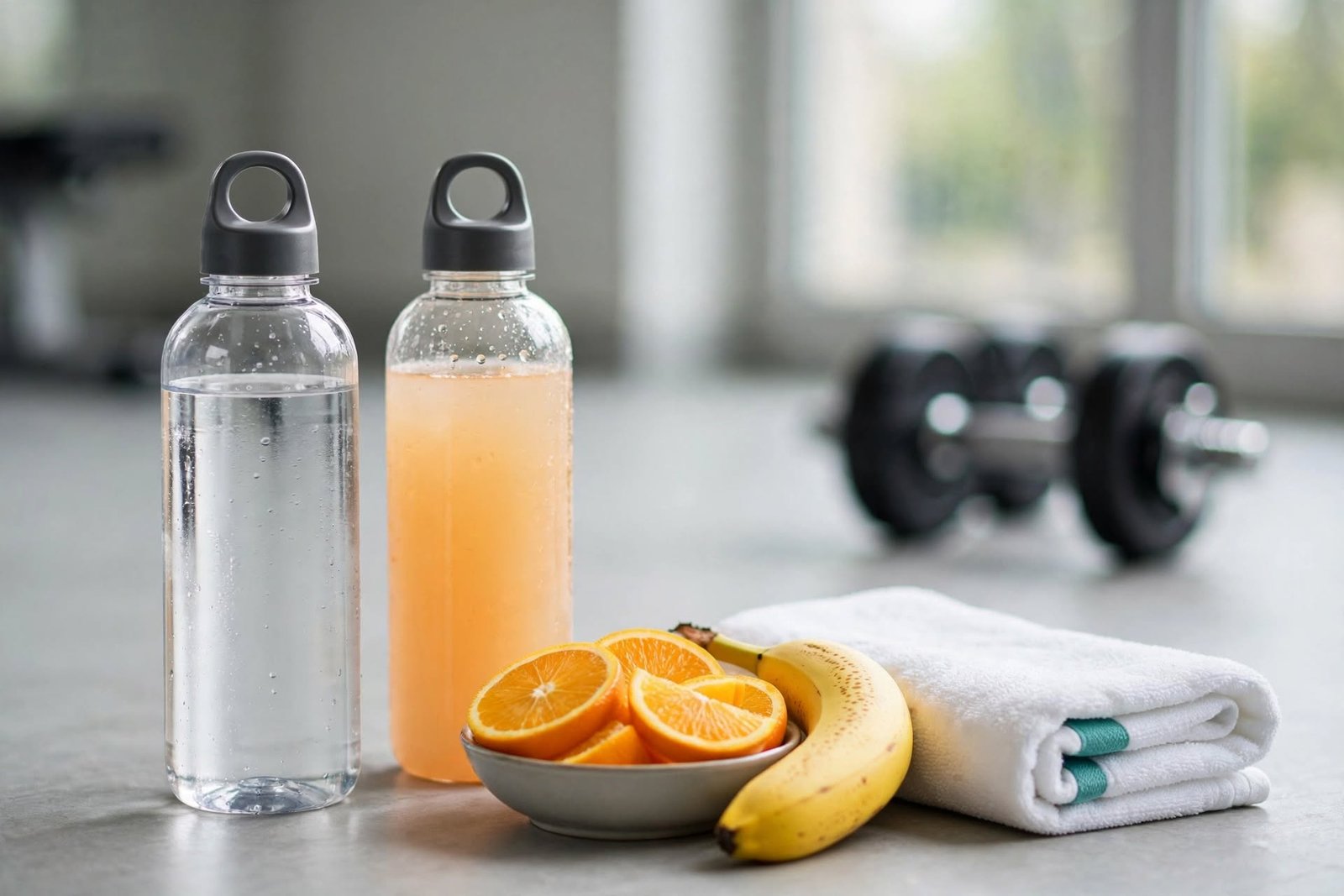
Electrolyte powders, tablets, and sports drinks are everywhere, and their marketing suggests you need them every time you break a sweat. But do you? For many workouts, plain water is enough. For others, especially long, hot, or very sweaty sessions, electrolytes can help. And there’s one hydration mistake that’s more dangerous than not drinking enough: drinking too much.
This guide explains what electrolytes do, when water is enough, when electrolytes make sense, how to estimate your own sweat losses, and how to avoid both dehydration and overhydration.
The Short Answer
| Your workout | What you likely need |
|---|---|
| Up to about 1 hour, moderate intensity, normal conditions | Water is usually enough; regular meals replace lost electrolytes |
| Longer than about 1 hour, especially hard efforts | Fluids with sodium and carbohydrates may help |
| Hot or humid conditions, or you’re a heavy or salty sweater | Electrolytes are more likely to be useful |
| Endurance events (several hours) | Plan fluids and sodium; drink to thirst and avoid overdrinking |
The safest general rule from an international expert panel: drink when you’re thirsty, not on a forced schedule.
What Are Electrolytes?
Electrolytes are minerals that carry an electrical charge, including sodium, potassium, chloride, magnesium, and calcium. They help move fluid in and out of cells and support nerve signals, muscle contractions, heart rhythm, and blood pressure.
When you sweat, you lose water and electrolytes, mainly sodium. How much you lose varies widely from person to person.
When Water Is Enough
For most everyday workouts, such as a 45-minute gym session or a 30-minute run, you don’t need a special electrolyte drink.
A sports medicine scientist who studies hydration, Tamara Hew-Butler, has explained that people don’t need to replace lost electrolytes immediately because they generally make them up in their meals (Oman Observer). The same report noted that in several small studies, athletes didn’t report a performance difference between water and electrolyte drinks, even after five hours of running in 86°F heat.
Bottom line: If your workouts are around an hour or less and you eat regular meals, water is usually all you need.
When Electrolytes Can Help
The American College of Sports Medicine (ACSM) states that during exercise, drinks containing electrolytes and carbohydrates can provide benefits over water alone under certain circumstances (ACSM, 2007). An earlier ACSM position stand recommended adding carbohydrates and electrolytes for exercise lasting longer than one hour (ACSM, 1996).
Electrolytes are more likely to be useful if:
- You exercise for longer than about 1 hour, especially at high intensity
- It’s hot or humid, which increases sweating
- You’re a heavy sweater, or see white, salty streaks on your clothes or skin
- You train hard more than once a day and need to recover quickly between sessions
- You’re doing endurance events, such as long runs, rides, or hikes
- You’ve had significant fluid losses from illness such as vomiting or diarrhea
How to Estimate Your Sweat Rate
Sweat rates and sweat sodium vary widely, so the ACSM recommends individualized hydration plans and suggests estimating sweat rate by weighing yourself before and after exercise.
Simple method:
- Weigh yourself before exercise, ideally without clothes.
- Exercise for one hour, noting how much you drink.
- Weigh yourself again, after toweling off.
- Calculate: (weight before − weight after) + fluid you drank = sweat loss. 1 kg of weight loss is about 1 liter of fluid.
Example: You weigh 70.0 kg before and 69.3 kg after a one-hour workout, and you drank 0.5 L. Your sweat loss is 0.7 + 0.5 = about 1.2 liters per hour.
What to aim for:
- The ACSM’s goal is to avoid losing more than 2% of body weight from fluid loss during exercise. For a 70 kg person, that’s about 1.4 kg.
- Don’t gain weight during exercise. Weighing more after exercise than before suggests you drank more than you lost, which raises the risk of overhydration.
A smart scale works well for this. Body weight is the metric smart scales measure most accurately.
The Hidden Risk: Drinking Too Much
Exercise-associated hyponatremia (EAH) occurs when you drink so much that your kidneys can’t excrete the excess water, diluting the sodium in your blood (Loyola University). At least 14 deaths of marathon runners, football players, and other athletes have been attributed to it.
Symptoms include headache, vomiting, confusion, and seizures (ConsumerAffairs). Severe cases can be fatal.
Risk factors include very long exercise (over four hours), easy access to drinks, hot conditions, and following advice to drink on a fixed schedule or until your urine is clear.
What experts recommend: The 2015 International Exercise-Associated Hyponatremia Consensus panel concluded that the safest strategy before, during, and right after exercise is to drink palatable fluids when thirsty (ScienceDaily). Their short summary: drink to thirst and salt to taste.
Important: Sports drinks don’t fully prevent hyponatremia if you drink far too much, because they contain far less sodium than your blood. Avoiding overdrinking is what matters most.
Seek emergency care if someone becomes confused, has a severe headache, vomits repeatedly, or has a seizure during or after prolonged exercise.
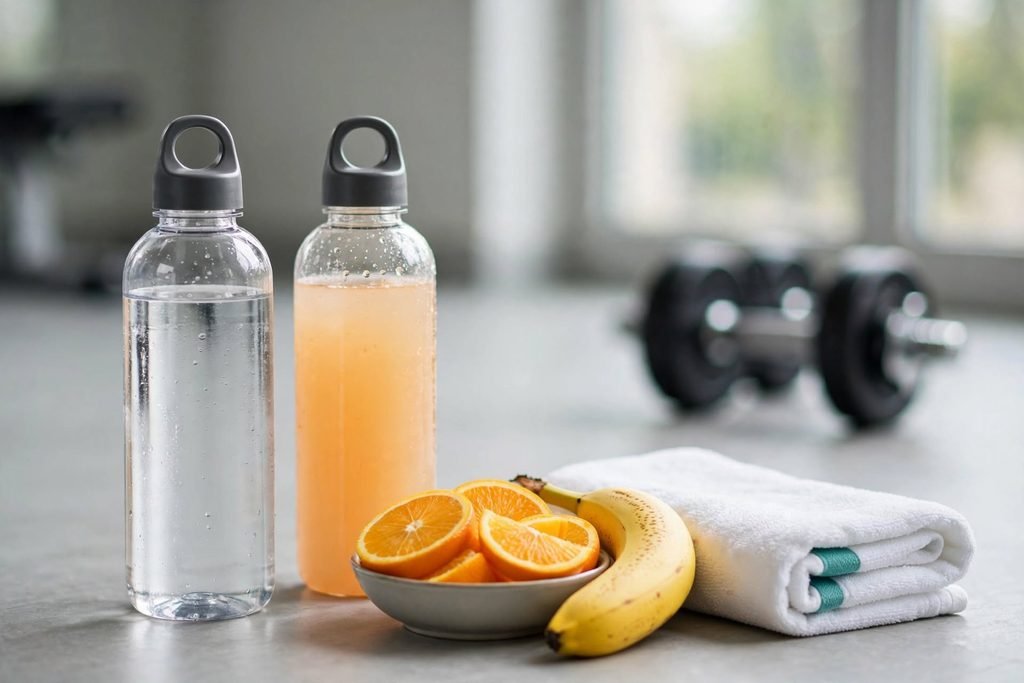
Electrolytes From Food vs Supplements
For most people, a normal diet replaces the electrolytes lost in sweat.
| Electrolyte | Food sources |
|---|---|
| Sodium | Salted foods, broth, pretzels, cheese, bread |
| Potassium | Bananas, potatoes, spinach, beans, yogurt, oranges |
| Magnesium | Nuts, seeds, whole grains, leafy greens |
| Calcium | Dairy, fortified plant milks, tofu, leafy greens |
Electrolyte drinks and powders are most useful when:
- You’re exercising long or hard in the heat
- You need a convenient option during a workout
- You struggle to eat during long sessions
How to Choose an Electrolyte Product
- Check the sodium content. Sodium is the main electrolyte lost in sweat. Amounts vary widely between products.
- Check the sugar. Carbohydrates help during long, hard sessions, but are unnecessary calories for short workouts.
- Ignore vague claims. Some brands use “electrolytes” mainly as a marketing tool.
- Look for third-party testing if you compete in tested sports.
- Follow the label’s mixing instructions.
Browse Fittnexa’s electrolytes category or pick up a water bottle that makes it easier to drink when you’re thirsty.
Who Should Talk to a Doctor First
Check with your healthcare provider before using electrolyte supplements regularly if you:
- Have high blood pressure, heart failure, or kidney disease, or have been told to limit sodium or potassium
- Take medications that affect fluid or electrolyte balance, such as diuretics
- Have frequent cramps, dizziness, or fainting during exercise
Common Mistakes to Avoid
- Drinking on a fixed schedule regardless of thirst during long events.
- Aiming for clear urine. This is a sign you may be drinking more than you need.
- Using sugary electrolyte drinks for every short workout.
- Ignoring your sweat rate. Two people doing the same workout can lose very different amounts.
- Assuming electrolyte drinks prevent hyponatremia no matter how much you drink.
- Skipping meals after long, sweaty sessions. Food helps replace lost sodium and other electrolytes.
Frequently Asked Questions
Is water enough for a 1-hour workout?
For most people exercising at moderate intensity in normal conditions, yes. Regular meals typically replace the electrolytes lost.
Do electrolytes help with muscle cramps?
Cramps during exercise have several possible causes, including muscle fatigue, and electrolyte loss isn’t always the reason. Electrolytes may help some heavy, salty sweaters, but evidence is mixed. See a doctor if cramps are frequent or severe.
Can you drink too many electrolytes?
For healthy people, normal amounts from sports drinks are unlikely to overload the system. People with kidney or heart conditions, or those on sodium or potassium restrictions, should check with a doctor.
Should I drink electrolytes before or after a workout?
For long or hot workouts, some people benefit from fluids and sodium before, during, and after exercise. After exercise, the ACSM’s goal is to replace any fluid and electrolyte deficit. For short workouts, a normal meal and water usually do the job.
Is coconut water a good electrolyte drink?
Coconut water contains potassium but is relatively low in sodium, the main electrolyte lost in sweat. It’s fine for light activity but may not be enough for long, sweaty sessions.
How do I know if I’m a salty sweater?
Common signs include white, crusty streaks on your clothes or skin after exercise, or sweat that stings your eyes. Salty sweaters may benefit more from sodium during long workouts.
Conclusion
For most workouts lasting about an hour or less, water and regular meals are enough. Electrolytes become more useful during long, hard, or hot sessions, or if you sweat heavily.
The most important rule is to drink when you’re thirsty. Overdrinking during long events can cause a dangerous drop in blood sodium. Weigh yourself before and after exercise to learn your sweat rate, aim to avoid losing more than about 2% of your body weight, and never gain weight during exercise.
Sources
- American College of Sports Medicine. Position stand: Exercise and fluid replacement. Med Sci Sports Exerc, 2007.
- American College of Sports Medicine. Exercise and Fluid Replacement (1996 position stand).
- ScienceDaily. Drink when thirsty to avoid fatal drops in blood sodium levels during exercise. 2015.
- Loyola University Chicago. Athletes should drink only when thirsty, according to new guidelines.
- Oman Observer. Do you need to drink electrolytes?
Health information disclaimer: This article is for general educational purposes and is not medical advice. It has not been reviewed by a physician or dietitian. Consult a healthcare professional if you have a medical condition, take medications, or have symptoms such as confusion, severe headache, or fainting during exercise.