You pushed hard at the gym, and a day later every stair feels like a challenge. Do you reach for an ice pack or a heating pad? Ask five people and you’ll likely get five answers: ice right away, heat after 48 hours, alternate both, take an ice bath.
This guide looks at what controlled studies found about heat and cold for post-workout muscle soreness, a lesser-known downside of regular ice baths if you’re trying to build strength, and the safety mistakes that cause real burns and cold injuries every year.
The Short Answer
- For ordinary post-workout soreness, both heat and cold can help. A meta-analysis of 32 randomized trials found both reduced pain when used within an hour after exercise, with no significant difference between them.
- Choose whichever feels better and fits your situation. Heat tends to feel better for stiff, tight muscles. Cold tends to feel better right after hard exercise or for a fresh, swollen injury.
- If you’re training for strength or muscle growth, avoid making ice baths a regular habit right after lifting. One study found regular cold water immersion blunted long-term strength and muscle gains.
- Safety matters more than the choice. Never fall asleep on a heating pad, always use a barrier between ice and skin, and be cautious if you have diabetes, poor circulation, or reduced sensation.
Why Muscles Get Sore After Exercise
The achy, stiff feeling that peaks a day or two after a hard or unfamiliar workout is called delayed onset muscle soreness (DOMS). It’s especially common after new exercises, a sudden increase in intensity, or movements that load muscles as they lengthen, like walking downhill or lowering weights slowly.
DOMS is a normal response to unfamiliar training and usually fades within a few days. Heat and cold don’t “cure” it. They may make it feel less painful while your body adapts.
What the Research Says
Both heat and cold reduce soreness, similarly
A 2021 systematic review and meta-analysis in Physical Therapy in Sport pooled 32 randomized controlled trials involving 1,098 people with DOMS (Wang et al., 2021). It found:
- Cold therapy applied within 1 hour after exercise reduced pain during the first 24 hours, with no clear effect beyond 24 hours.
- Heat therapy also reduced pain.
- There was no significant difference between heat and cold.
- Cold water immersion and hot packs appeared to have the best effects. The authors noted that more high-quality studies are needed.
A 2022 network meta-analysis from the same research group compared ten different hot and cold methods (Wang et al., 2022). Hot packs ranked highest for pain relief within the first 24 and 48 hours, while a newer form of cryotherapy ranked highest after 48 hours. Again, the authors cautioned that the included studies were of limited quality, so firm conclusions aren’t possible.
Cold water immersion: helpful, but not clearly better than alternatives
A Cochrane review analyzed cold water immersion, typically in water below 15°C (59°F), for muscle soreness after exercise (Bleakley et al., 2012). It found some evidence that cold water immersion reduced DOMS compared with resting or doing nothing. However:
- It was not clearly better than warm water, contrast (alternating hot and cold) immersion, or active recovery.
- The lead author also noted that cold water immersion induces a degree of shock on the body, and that evidence on its safety was lacking (ScienceDaily).
The ice bath trade-off for strength training
If your goal is getting stronger or building muscle, this finding matters.
A 2015 study in The Journal of Physiology had 21 physically active men strength train twice a week for 12 weeks, followed by either 10 minutes of cold water immersion or active recovery on an exercise bike (Roberts et al., 2015):
- Strength and muscle mass increased more in the active recovery group than in the cold water group.
- A second experiment found cold water immersion blunted the activity of key muscle-building signals and cells for up to 2 days after exercise.
Important caveats: This was a small study in young men, and the authors acknowledged that other studies have shown mixed results. The lead researcher suggested ice baths may still be useful during periods when recovery matters more than adaptation, such as between competitions (University of Queensland).
Practical takeaway: If you lift to build strength or muscle (see our guide to resistance bands vs dumbbells), occasional cold therapy for comfort is unlikely to matter much. But avoid making full ice baths a routine straight after most strength sessions.
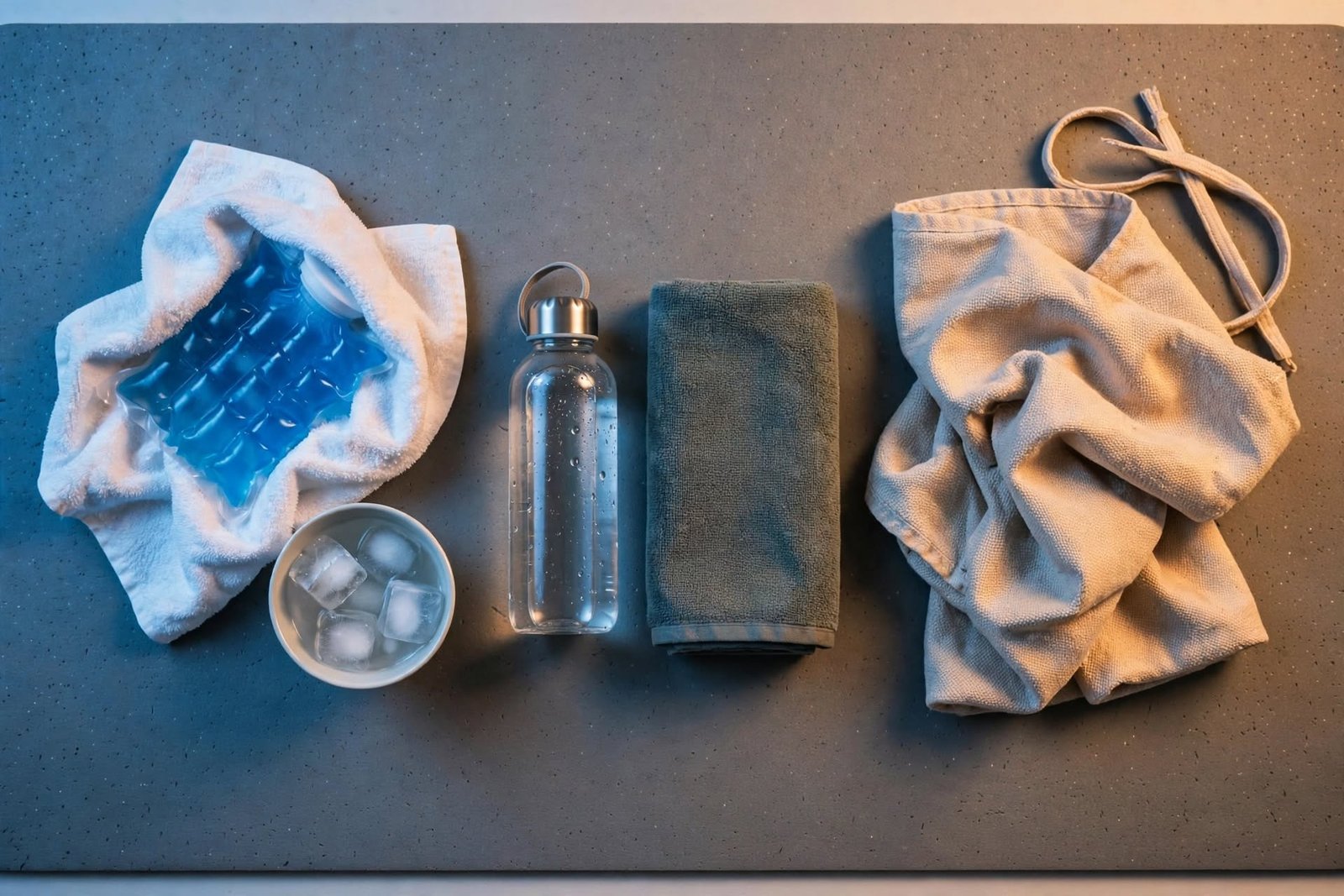
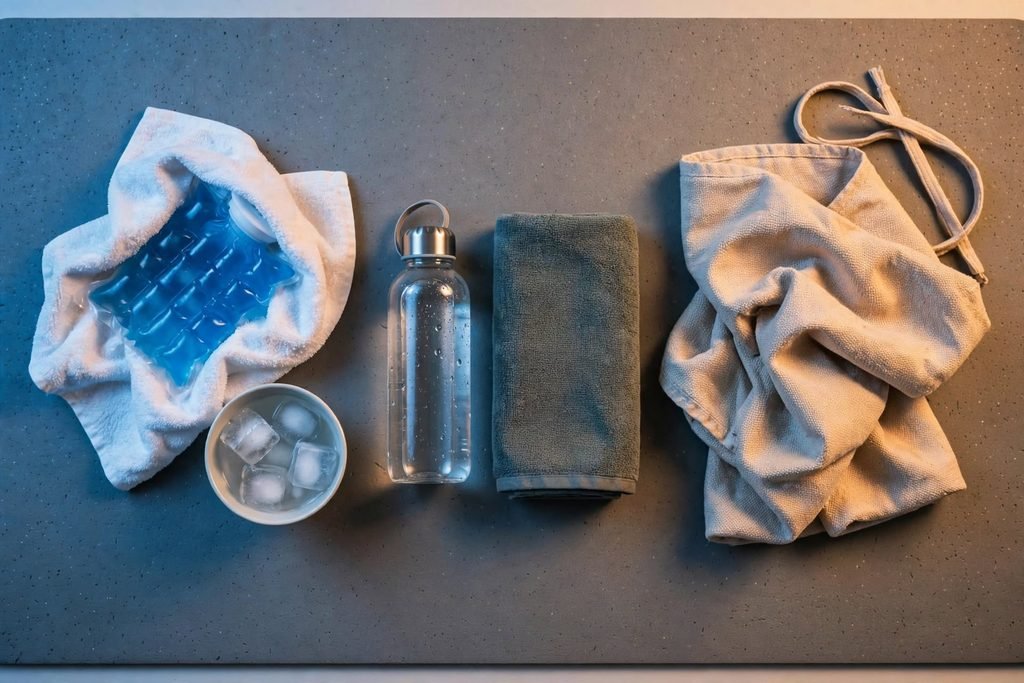
Heat vs Cold: When to Use Each
| Situation | Better choice | Why |
|---|---|---|
| Ordinary soreness after a workout | Either; pick what feels better | Research shows similar pain relief |
| Stiff, tight muscles | Heat | Warmth helps muscles feel looser |
| Before a workout, if muscles feel stiff | Heat (or a light warm-up) | Helps you feel ready to move |
| Right after very intense or unusual exercise | Cold is a common choice | Can numb pain in the short term |
| Fresh injury with swelling (sprain, knock) | Cold is commonly recommended | Get professional advice if the injury is significant |
| Ongoing muscle aches or back stiffness | Heat is commonly preferred | Often feels more comfortable for chronic tension |
| Regular strength-building training | Avoid routine ice baths right after lifting | May blunt long-term gains |
Remember: There’s no strong evidence that one rigid rule (“always ice for 48 hours, then heat”) works best for ordinary soreness. Comfort and safety matter more.
How to Use Heat Safely
Heating pads seem harmless, but they’re a well-documented cause of burns. A nurse manager at the University of Utah Health Burn Center has noted that heating pads pose a particular burn risk to older adults, and that deaths from heating pad burns have been reported (University of Utah Health).
Heat safety checklist:
- Never fall asleep with a heating pad on. Choose a model with an automatic shut-off timer.
- Use a low or medium setting and keep a layer of fabric between the pad and your skin.
- Don’t lie on top of an electric heating pad, which traps heat against your body.
- Check your skin regularly. Redness that doesn’t fade, blistering, or pain means stop.
- Don’t use heat on fresh, swollen injuries, open wounds, or areas with poor sensation.
- Be especially careful if you have diabetes, nerve damage, or poor circulation, since reduced sensation makes burns more likely. Ask your doctor first.
- Supervise use by older adults, and never use heating pads on infants.
A warm bath or shower is a simple alternative with less burn risk from prolonged contact.
How to Use Cold Safely
- Always use a barrier. Wrap ice packs or frozen gel packs in a thin towel. Never put ice directly on bare skin for long.
- Keep sessions short and check your skin. Stop if skin becomes white, hard, numb, or blistered.
- Don’t use cold on areas with poor circulation or reduced sensation.
- Be cautious with cold water immersion. Sudden cold can cause a shock response. If you have a heart condition, high blood pressure, Raynaud’s phenomenon, or other circulatory problems, talk to a doctor before trying ice baths or cold plunges.
- Never do cold water immersion alone if you’re new to it, and get out if you feel dizzy, confused, or unwell.
Contrast Therapy: Alternating Heat and Cold
Some people alternate heat and cold, either with packs or by switching between warm and cold water. The Cochrane review found no clear difference in soreness between cold water immersion and contrast immersion. If you enjoy contrast therapy, it’s a reasonable option, but there’s no strong evidence it’s superior.
What Helps Soreness Besides Heat and Ice
Heat and cold offer short-term relief. The biggest factors in how sore you get and how quickly you bounce back are:
- Progressing gradually. Most severe DOMS comes from doing too much, too soon.
- Light movement. Easy walking, cycling, or mobility work can help you feel less stiff.
- Sleep and nutrition, including adequate protein.
- Gentle massage tools. Massage guns and foam rollers can help muscles feel looser in the short term. Never use a massage gun on your neck.
You can browse options in Fittnexa’s cold therapy, heating pads, and massage guns categories.
When Soreness Isn’t Just Soreness
Normal DOMS improves within a few days. Get medical attention if you have:
- Severe pain, especially if it’s out of proportion to your workout
- Dark, cola-colored urine, extreme muscle weakness, or swelling after intense exercise. These can be signs of rhabdomyolysis, a medical emergency.
- Sudden sharp pain during exercise, a popping sound, or inability to bear weight
- Joint swelling, numbness, tingling, or pain that persists beyond a week
Frequently Asked Questions
Should I use ice or heat the day after a workout?
Either can help. Research found similar pain relief for heat and cold. If your muscles feel stiff and tight, heat often feels better. If they feel hot or you’ve had a fresh knock, cold may feel better.
Is the “ice for 48 hours, then heat” rule true?
It’s common advice for acute injuries with swelling, but for ordinary post-workout soreness, there’s no strong evidence that a strict timeline matters. Choose what feels better and use it safely.
Do ice baths ruin muscle gains?
One 12-week study found regular cold water immersion right after strength training blunted gains in strength and muscle mass. Other studies have been mixed. If muscle growth is your goal, it’s sensible to avoid routine ice baths straight after lifting.
Is it safe to sleep with a heating pad?
No. Falling asleep with a heating pad on is a common cause of burns. Use a pad with an automatic shut-off and turn it off before sleeping.
How long should I use heat or ice?
Short sessions with regular skin checks are safest. Follow your product’s instructions, and stop immediately if your skin looks unusual, feels numb, or hurts.
Should I use heat before a workout?
Heat can help stiff muscles feel looser, but it doesn’t replace an active warm-up. A few minutes of light cardio and movement-specific exercises is still the best way to prepare.
Conclusion
For ordinary post-workout soreness, heat and ice both offer modest, short-term pain relief, and research hasn’t found a clear winner. Choose the one that feels better: heat for stiff, tight muscles, cold for the hours after hard exercise or a fresh injury.
If you’re training for strength or muscle growth, avoid making ice baths a routine immediately after lifting. Most importantly, use both safely: no sleeping on heating pads, always use a barrier with ice, and talk to a doctor first if you have diabetes, circulation problems, or reduced sensation.
Sources
- Wang Y et al. Heat and cold therapy reduce pain in patients with delayed onset muscle soreness: a systematic review and meta-analysis of 32 randomized controlled trials. Phys Ther Sport, 2021.
- Wang Y et al. Effect of cold and heat therapies on pain relief in patients with delayed onset muscle soreness: a network meta-analysis. J Rehabil Med, 2022.
- Bleakley C et al. Cold-water immersion (cryotherapy) for preventing and treating muscle soreness after exercise. Cochrane Database of Systematic Reviews, 2012.
- Roberts LA et al. Post-exercise cold water immersion attenuates acute anabolic signalling and long-term adaptations in muscle to strength training. J Physiol, 2015.
- University of Utah Health. Heating pads can cause second-degree burns.
Health information disclaimer: This article is for general educational purposes and is not medical advice. It has not been reviewed by a physician or physical therapist. For injuries, persistent pain, or medical conditions such as diabetes or circulatory problems, consult a qualified healthcare professional.